Bread - Wednesday
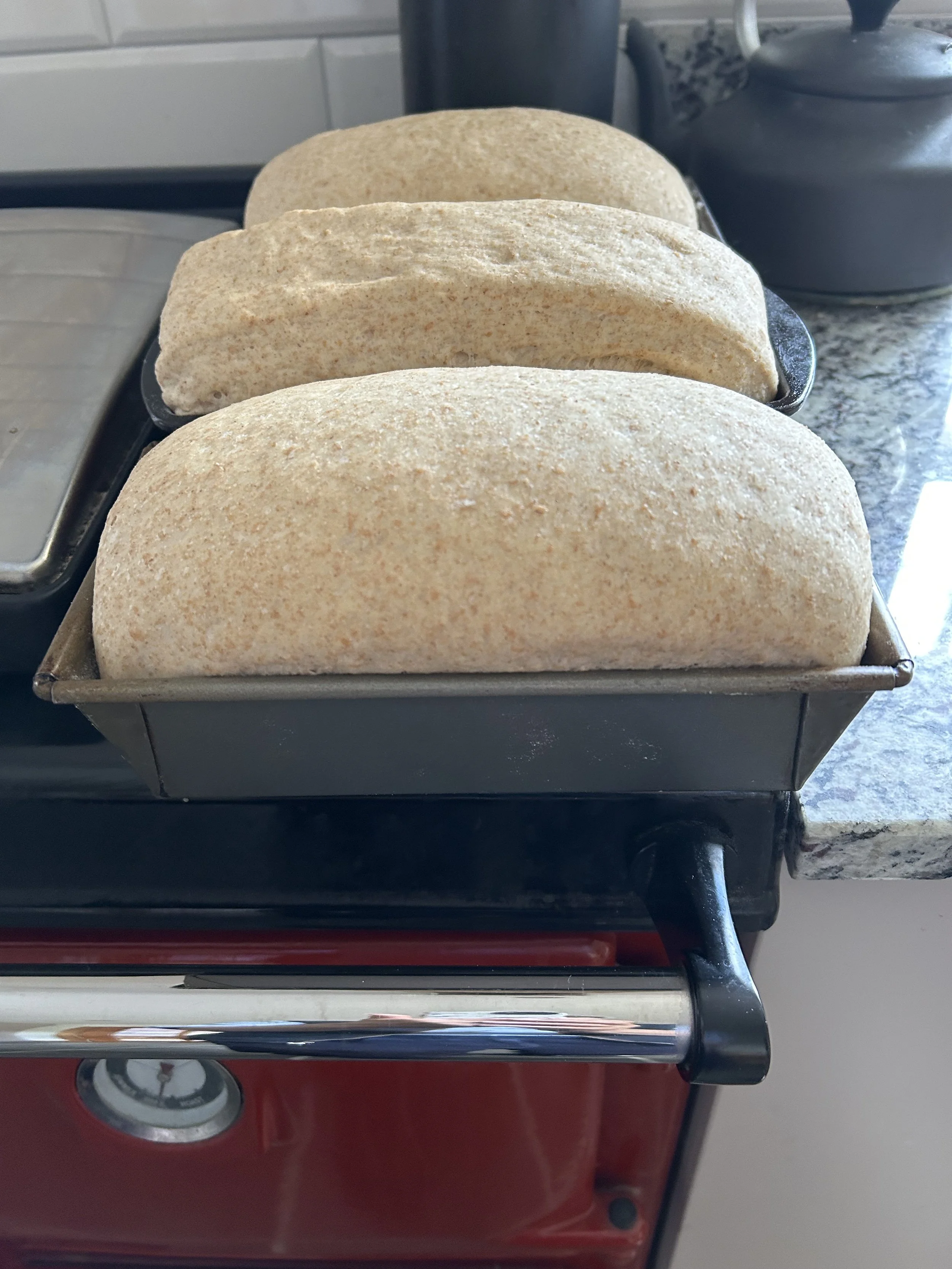
This week, I am thinking about how important bread is to us.
Nowadays, yeast is used to raise the dough, although some prefer a sourdough.
Whatever we use, I’d say that the critical thing in creating a light loaf is the decision when to move on from the rising of the dough to the next step, the proving.
For centuries, bakers didn’t understand the rising of dough. But around the end of the eighteenth century, bakers in Holland began to use a liquid from the breweries to raise their dough; shortly afterwards, dry cakes of yeast for baking appeared in Germany. A good few years went past before Louis Pasteur showed us that yeast was digesting the carbohydrate in wheat flour, making carbon dioxide and water.
Frequently, we read in the Old Testament that the Israelites were suspicious of raised bread. It’s likely that they learnt a lot about baking bread from the Egyptians when they were in captivity. Perhaps leaven had the flavour of Egypt about it, and they didn’t have time for the slow work of leaven when they were on the run from slavery.
But there is something wonderful about the way yeast changes a heavy lump of dough into a light and fragrant bread. Jesus compared leaven to the Kingdom of Heaven – a small piece of it would work in the world unseen, changing gradually the hearts of God’s people for the good.
I am greatly indebted to Mairead McIver for her advice.